automated garden
A garden-scale SCADA system built on ESP32 microcontrollers and
Inductive Automation's Ignition platform (potential to implement this for a larger garden-scale
project, decided against it for my 4 plants). Designed as a hands-on
ICS/OT credential and a real working system to water my plants.
Is this the most complex ICS/OT project? No, it's meant to be my introduction to electronics,
and to that end it's fantastic.
This project ended up being far less involved for the SCADA/ICS aspects because I got hired to
a full time internship shortly after ordering all the electronics.
.jpg)
.jpg)
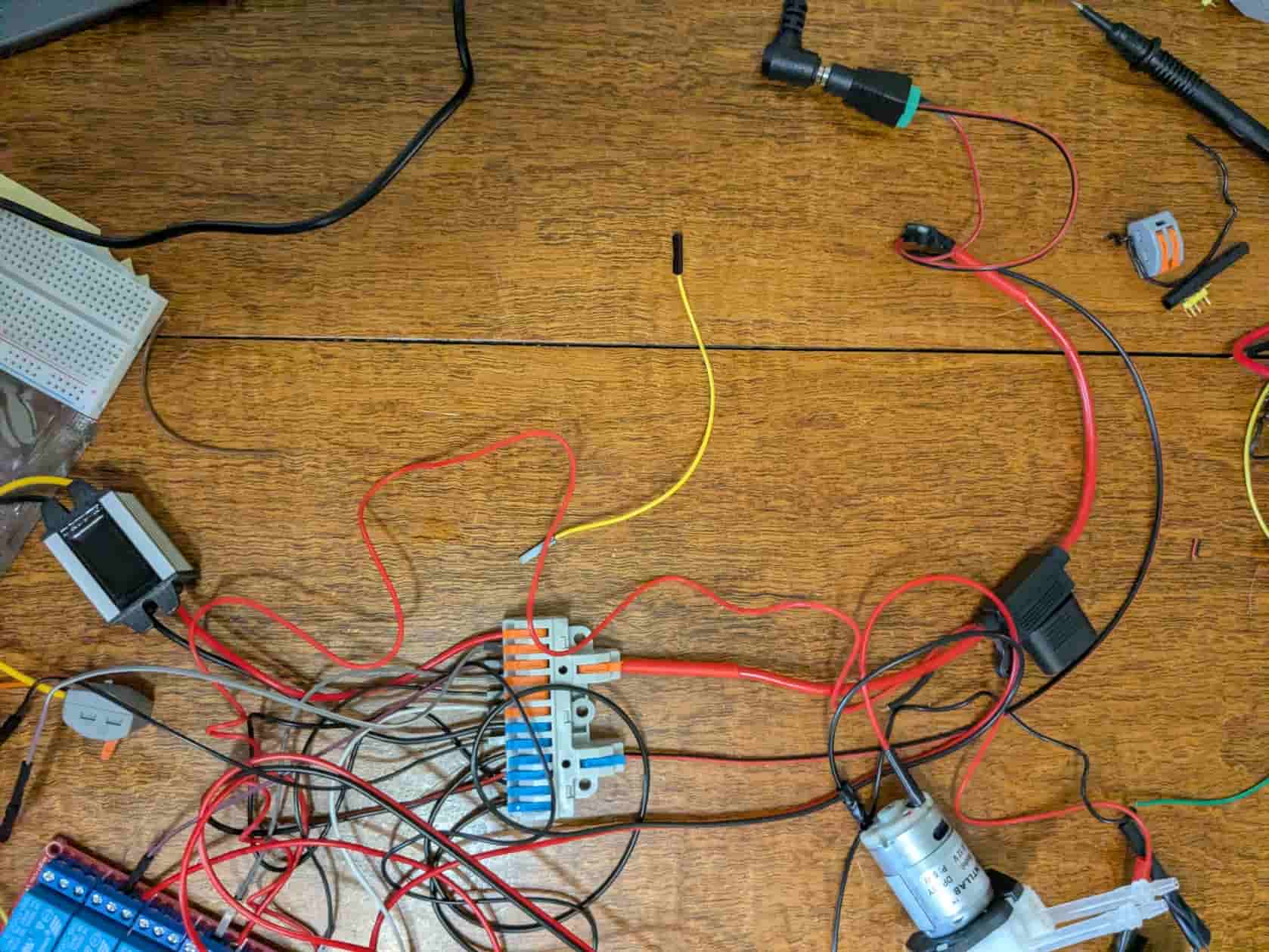
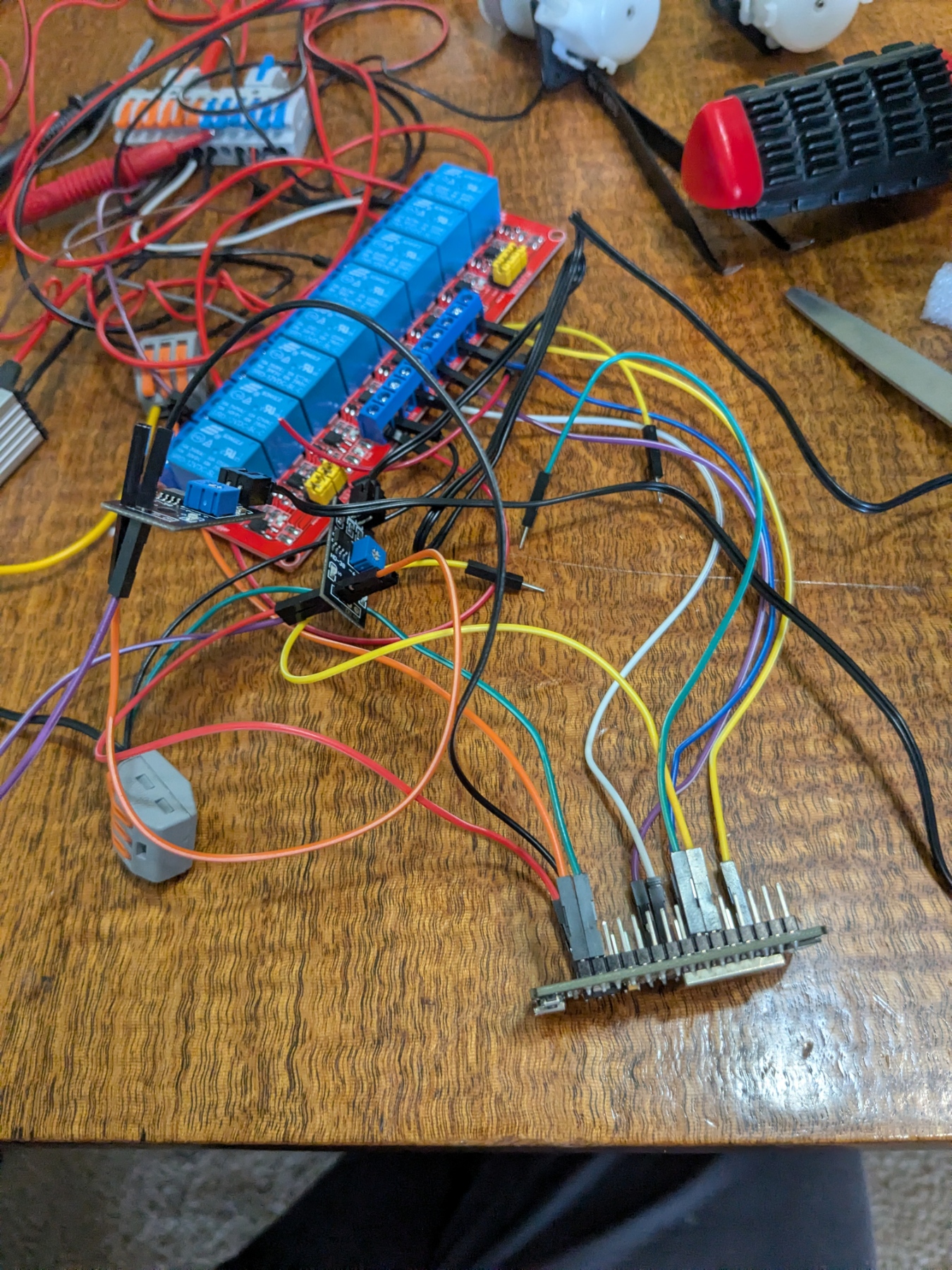
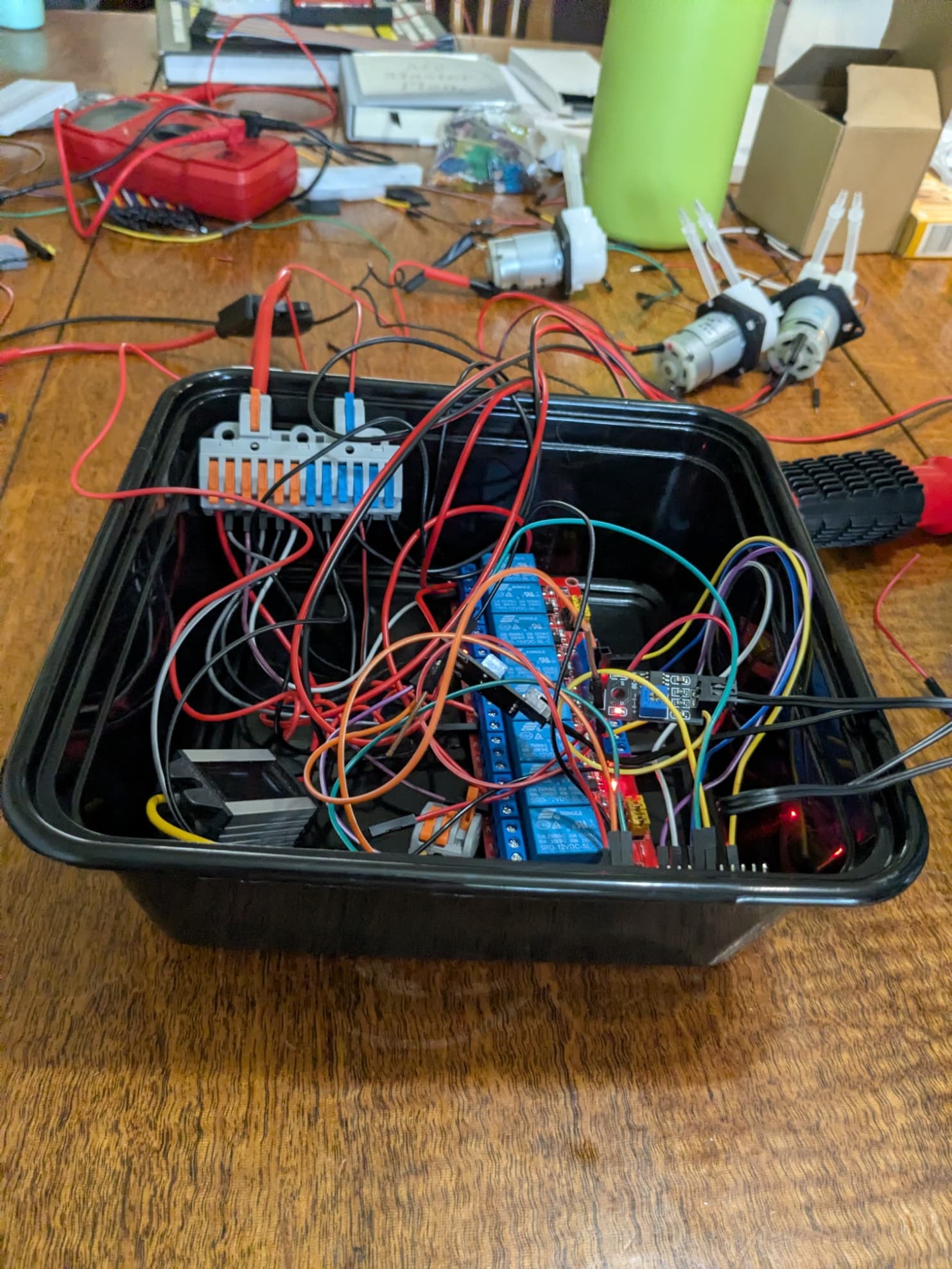
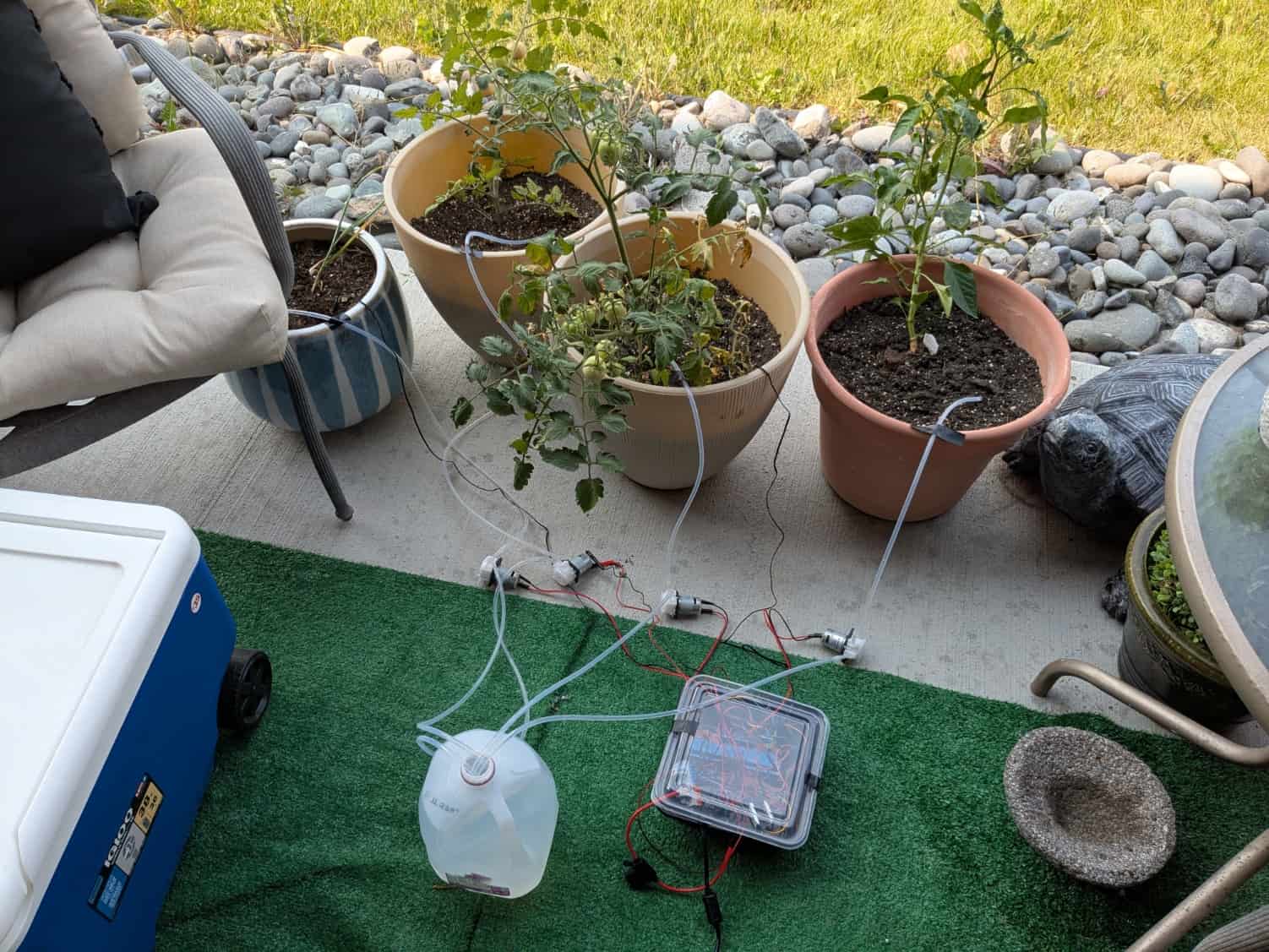
Overview
I didn't want to have to travel to my grandmother's house (where the garden bed lives) every other day for watering and I wanted to remove the guesswork, so I thought: "I'll get some mosture sensors and pumps, how hard could it be?" As a bonus I figured this would be a great way to dive into Ignition and SCADA systems. Ironically, in the end, the plants are living on my patio. The system waters four plants: two Roma tomatoes, a bell pepper, and garlic, based on soil moisture rather than a fixed timer. An ESP32 checks moisture once a day (via the analog output of a capacitive moisture sensor that converts capacitance to a 12 bit number) and, if a plant's soil has dropped below its threshold, switches on a 12V peristaltic pump through a relay for 10 seconds, then checks the moisture level again and repeats until it is wet enough to be below the trigger. Originally the plan was one sensor per plant. Towards the end, I discovered that the bulk-pack moisture sensors I'd bought didn't hold up in soil. They were finnicky, only giving reasonable readings when held a certian way in the soil, left alone in soil, unreliable. With only two sensors I trusted (the originals I'd started with), and limited time left in my summer, I restructured the system: one sensor lives in a tomato plant and drives the watering decision for both tomatoes and the pepper, and a second sensor lives in the garlic and drives that pump independently. It's a compromise, the tomato/pepper group shares one soil reading rather than getting individual ones. It's a tradeoff made under the constraints, not an oversight. Ideally I would have two sensors per plant and average them for a well rounded reading, but my 8 pack wasn't preforming.
Stack
ESP32— sensor nodes, runs logic for pumps, WiFi connectivity disabled for now, aspirations for cinnection to data analytics, ignition on a larger build.Arduino IDE- where I was able to write (paste), tweak, and compile code for the ESPSoldering Iron- used as needed, used to connect wiring of different gauges
What I learned
I have learned significantly more about circuitry, the differences between available current and draw and the self limiting properties of Motor EMF. I really like physics and science, learned as much as I could about it as a kid and teen, and haven't had much natural science exposure in Columbia since my coursework is mainly math and CS. It's satisfying to learn about the realm where they intersect, electronics and electric systems. I learned a lot of basic things relavent to my specific hardware stack and to using a multimeter correctly. I also learned that cheap electronics are bought in bulk making this project not very cheap at all. The only thing that hurt me in this project were the agressive clips on the wire connectors I bought, which snapped into place and hit my fingers a few times. Otherwise no injuries, electrocutions, or fires happened. (yet)
Status
Fully wired, tested end-to-end, and now living outside connected to the actual plants for the rest of the growing season. I finished this early August 2026 and started in July, most of it got knocked out in two weekends with little bits of wiring some evenings and a lot of nights where it wasn't top priority
Potential next steps
The current build is intentionally scoped to "get it working and watering," not to the fuller industrial-control-style architecture I'd originally sketched out because I got hired to a full time position shortly after ordering my parts. If I revisit this — particularly if I decide to pursue SCADA/OT integration roles directly rather than stay in the financial tech sector, the natural next layer is: - MQTT (Sparkplug B) so the ESP32 reports to a broker instead of running fully standalone - A Raspberry Pi as an edge broker, controlling additional features like a camera for computer vision monitoring of crops and connection to a server with Ignition for tag history, alarming, and dashboards - Security layered in properly: WireGuard for remote access, TLS on MQTT, audit logging, documentation aligned with IEC 62443 and MITRE ATT&CK for ICS A family member is currently building a large, commercial scale greenhouse, and if the timing and interest line up, this is a natural architecture to scale into something closer to that fuller vision more sensors, more zones, and the monitoring/remote-access layer this version deliberately left out for the sake of time and because it'd be a bit overkill for 4 plants.
Personal note
I have started ~many~ projects as a kid, teen, and now, but I've never really had a mentor, external guidance, or an accountability structure, so I typically got sidetracked, and full implementation hasn't happened. I'm proud to have followed through on this. That said, I have had support: Thanks to my Mom for letting me occupy the dining room table with my mess for a month, Thanks to my Uncle for providing the ESP32 board (and unused Pi), multimeter, and the two moisture sensors that worked well. Shout out to my coworker from IT who had an extra micro USB cable when I discovered the only one I had was charge only, permitting no data transfer to get the code onto the ESP. Thanks to Claude/ Anthropic doing a free student promo, I was able to ask follow up questions and get pointed to clear resources, saving me from any mistakes that might've fried my board. Also a farewell to Claude as that free promo ends in a month. Shout out to all of the people who contribute to open source projects like Arduino and the various nerds on the internet who's detailed blogs and articles I have referenced and which provided all the data AI companies have scraped to train their models on this niche.